Support
How can we help?
Have a question about Becoming or run into an issue? Start with the answers below, or reach out directly — we read every email.
Do I need an account to use Becoming?
No. Becoming works entirely without sign-in — just open the app and start a session.
Where are my custom affirmations, photos, and voice recordings stored?
Your own content stays on your device. Custom affirmations and settings are stored locally, and photos and voice recordings are saved to the app's own storage on your phone — none of it is ever uploaded.
How do I add my own photos or affirmations?
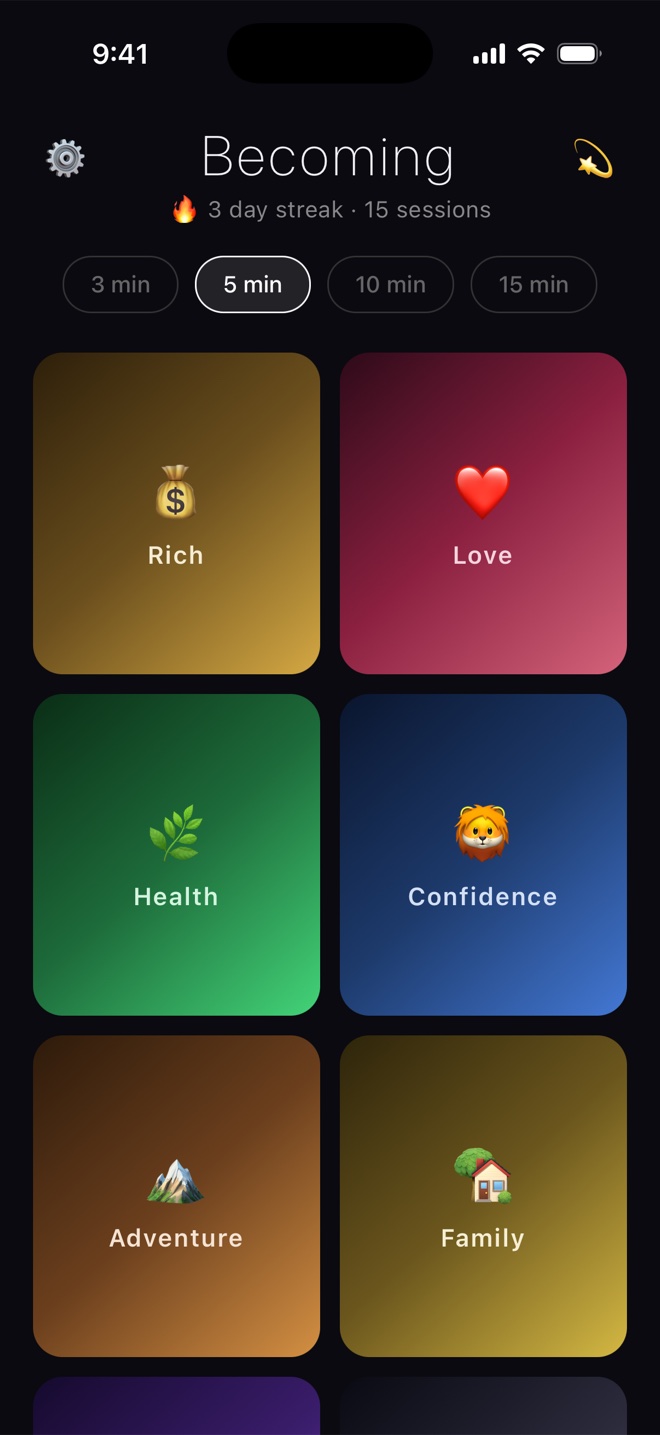
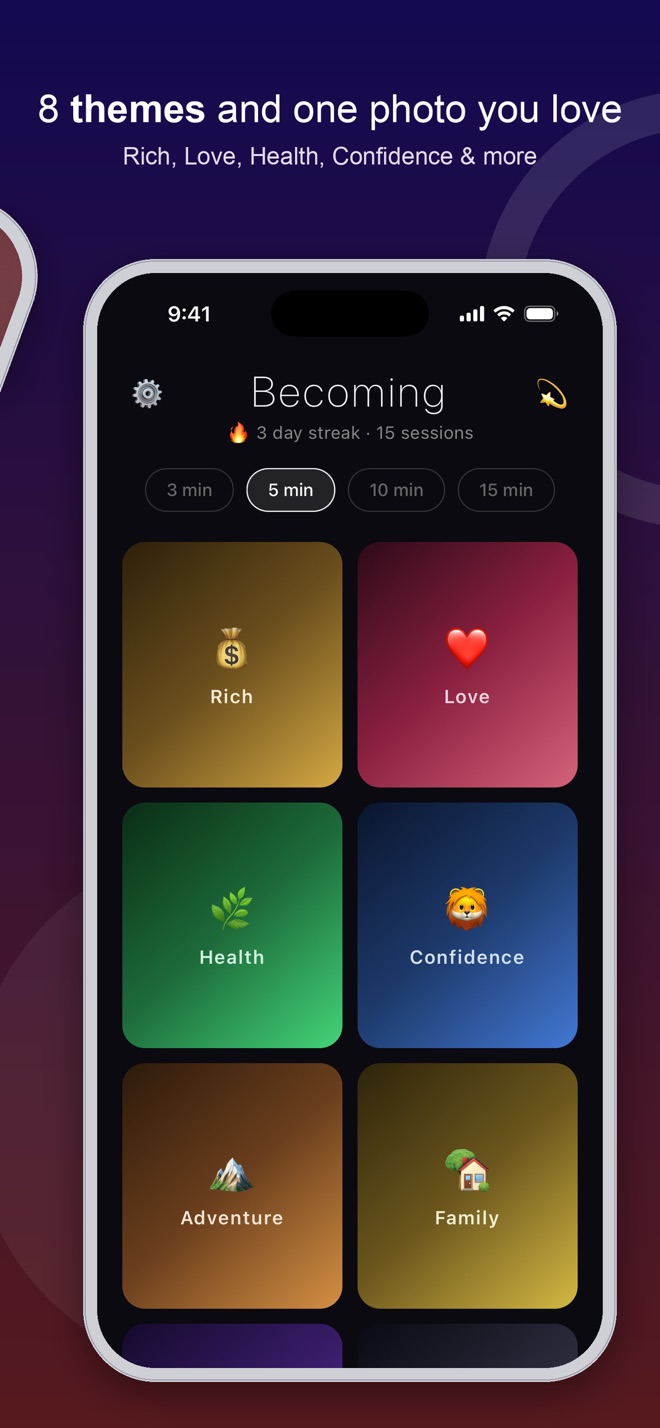
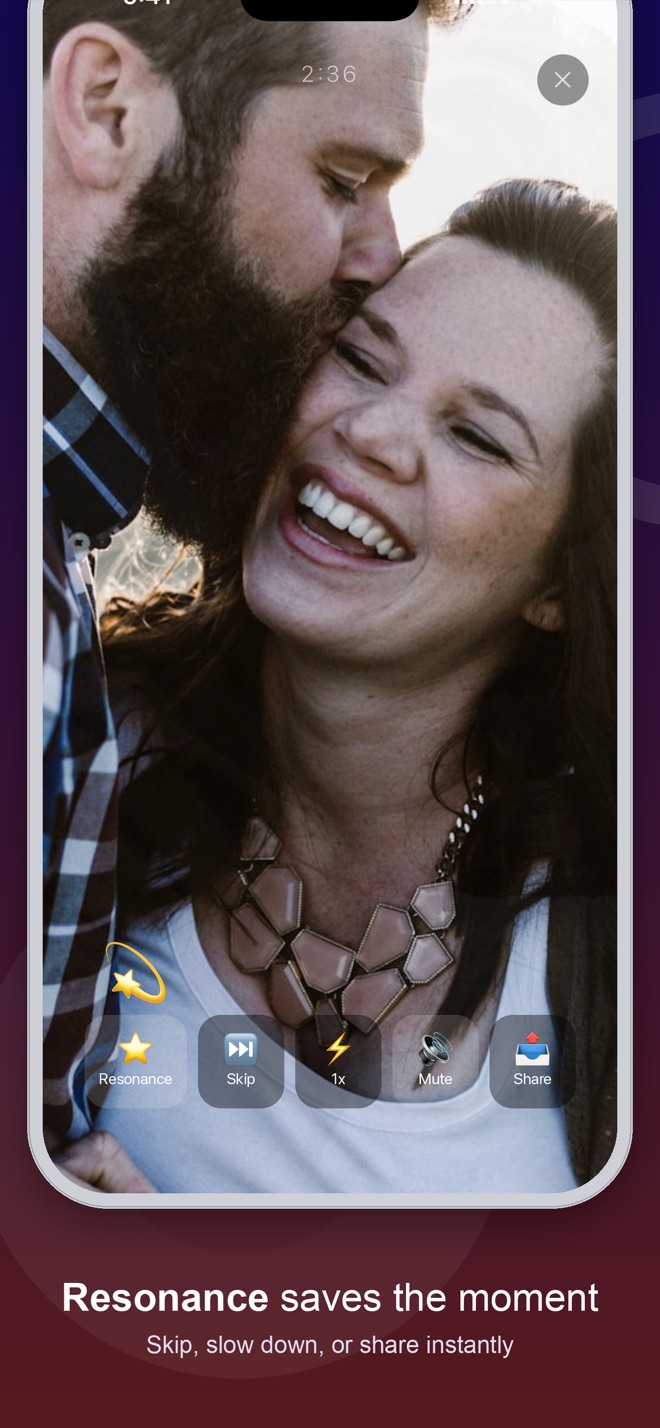
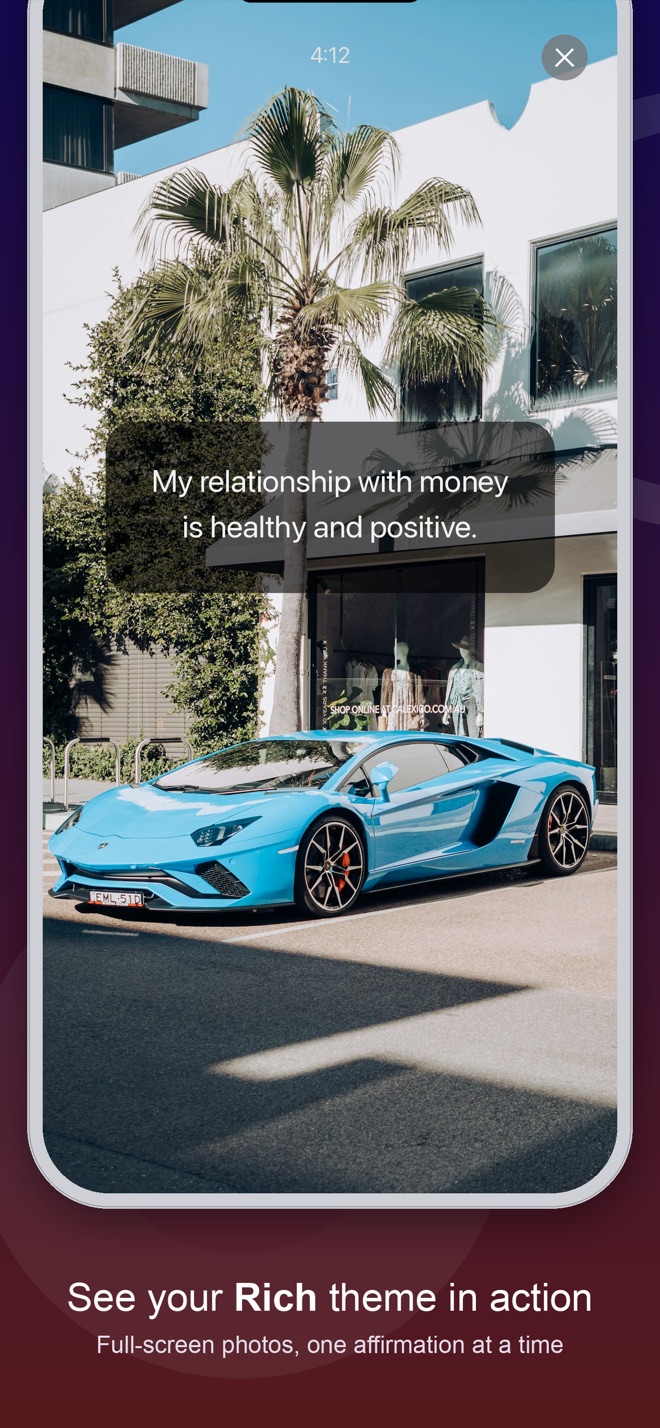
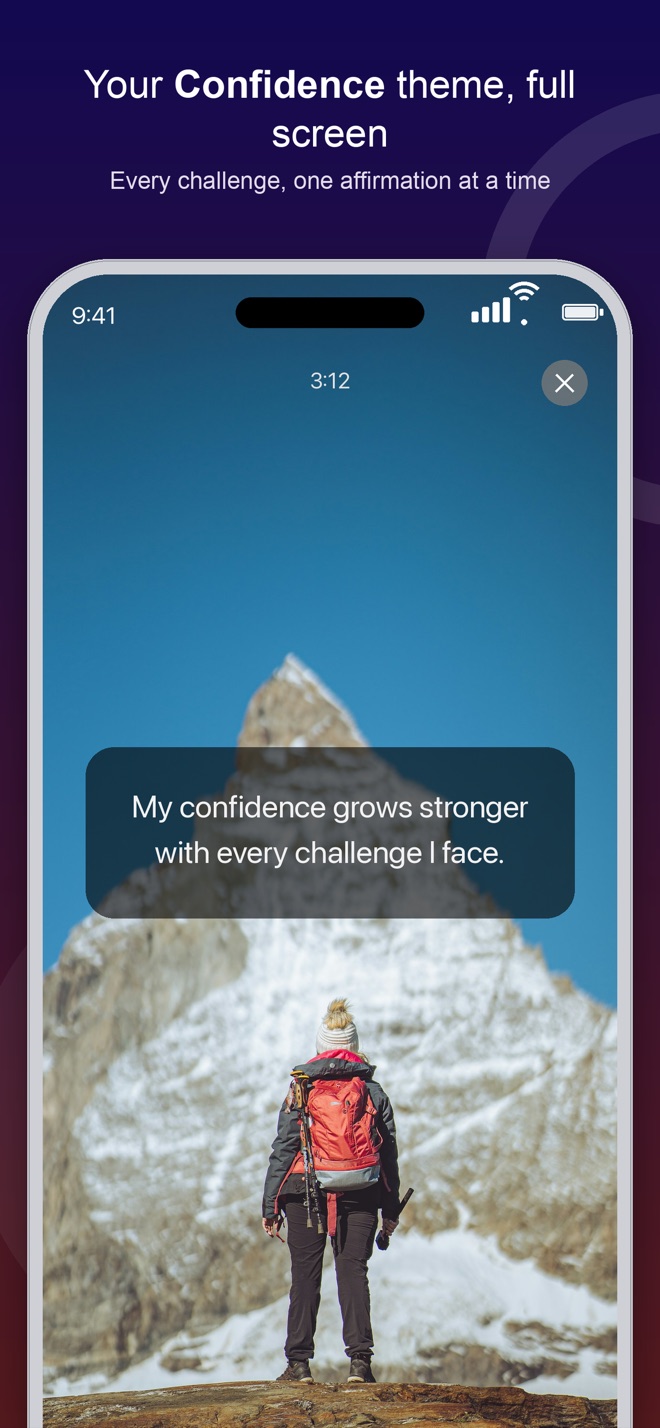
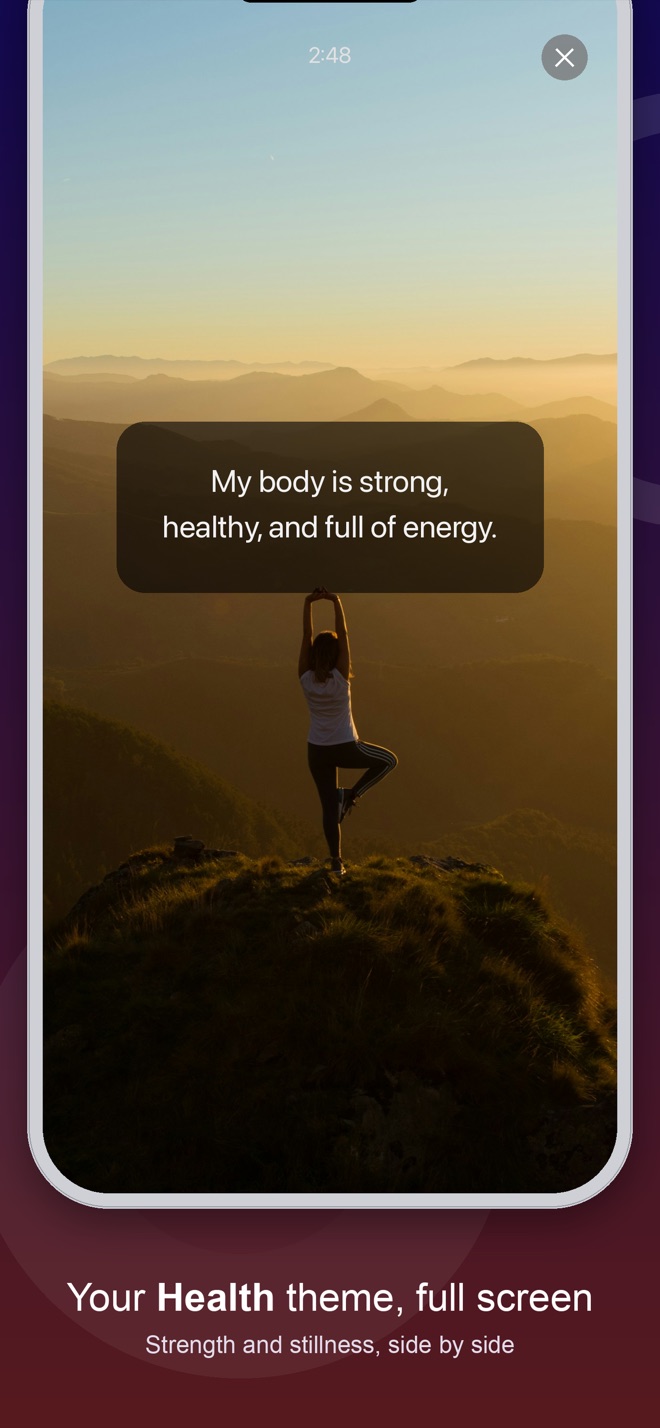
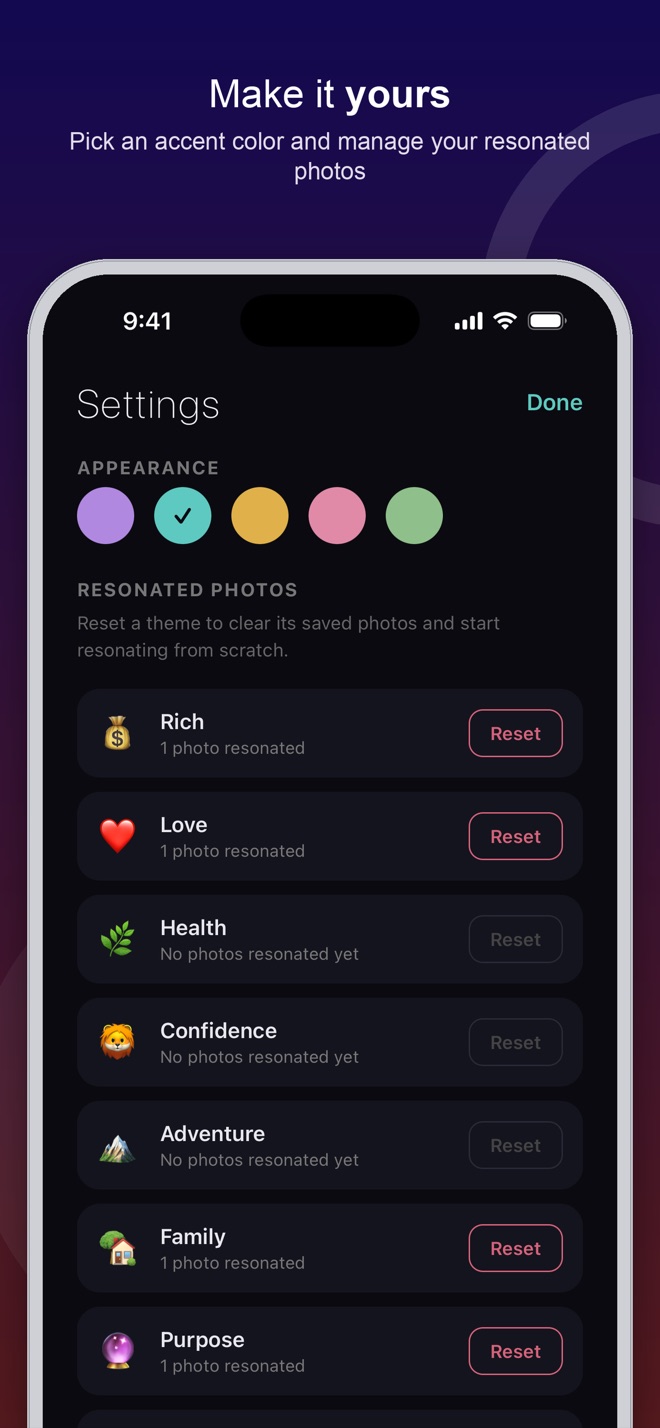
Tap the ••• on any theme tile on the home screen to open its editor, where you can add photos, write affirmations, and record your own voice. (A long press on the tile opens the same editor.)
How does the streak work?
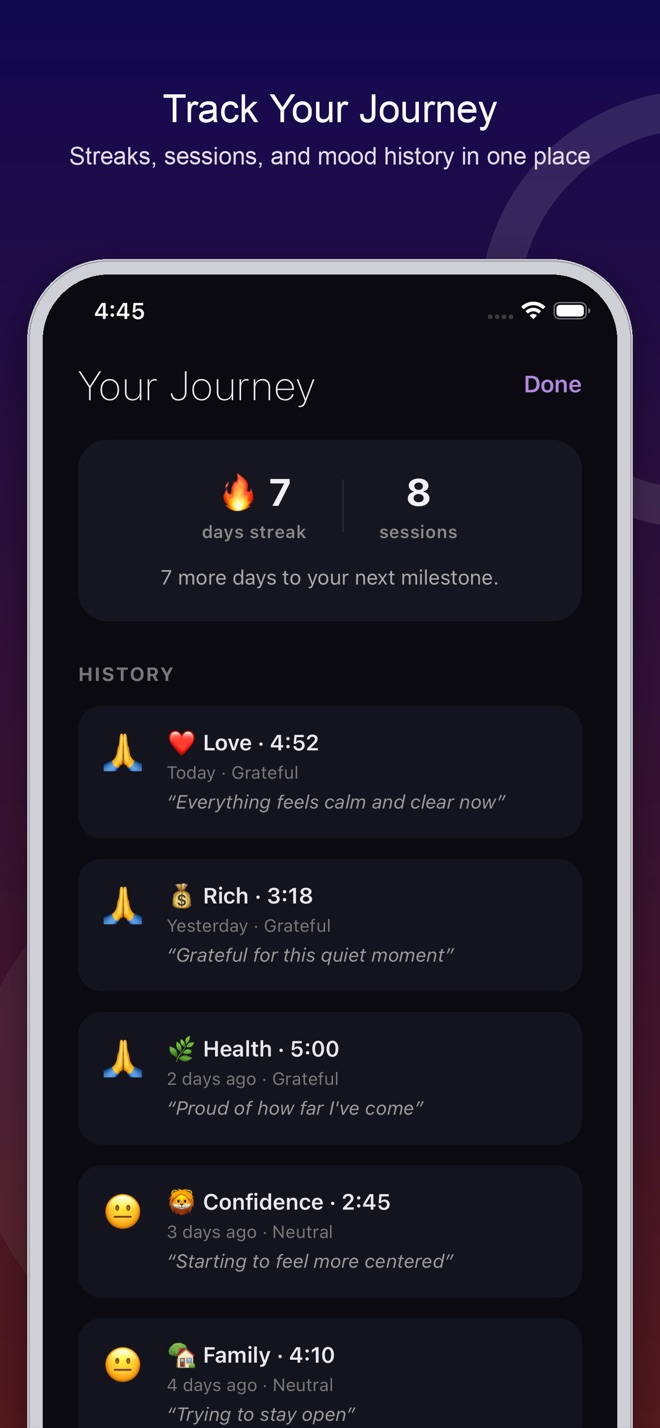
Completing a session on a given day counts toward your streak. Miss a single day and a monthly streak freeze automatically covers it once, so one busy day won't reset weeks of progress.
Can I turn off notifications?
Yes — reminders are entirely optional and can be changed or turned off from within the app at any time.
I found a bug or have a feature idea — who do I tell?
Email mark@vibecode.review — as a one-person project, feedback goes straight to the person building it.
Privacy Policy
Your privacy, simply explained
Last updated: August 25, 2026. This policy applies to the Becoming iOS application published by Mark Utility Labs.
🔒
Short version: Becoming stores your affirmations, photos, voice recordings and settings locally on your device, and none of it is ever sent to a server. What does leave the app is anonymous and technical: a crash report when the app crashes, and a count of how the unlock screen is used. No ads, no advertising identifiers, no tracking you across other apps or websites, and no sale of your data, ever.
1. What Becoming stores
Custom affirmations, photos you add, voice recordings, session history, streaks, and reminder settings are all created and stored locally on your device.
2. How it's stored
All of this data lives in the app's local storage on your device — there's no cloud account and no server sync. Deleting the app removes all of this data permanently.
3. Crash reports (Firebase Crashlytics)
Becoming uses Firebase Crashlytics, a service run by Google, to report crashes automatically so bugs get found and fixed. When the app crashes, a report goes to Google containing the device model, the iOS and app version, the technical details of the crash, and a random identifier Firebase generates for your installation of the app. That identifier is not your name, your email, or your Apple ID; delete and reinstall the app and it changes. A crash report never contains your affirmations, your photos or your voice recordings.
4. Anonymous usage counts (Firebase Analytics)
When Becoming shows its unlock screen, it counts a short list of events through Firebase Analytics, also from Google: that the screen was shown (and which of its two asks it was), that the free week offered there was taken, which layout was shown, and that an unlock completed. It also counts that the one-time offer sheet (the one that shows the other apps) was shown and what was tapped on it, and that the app asked whether you were enjoying it, with which of the two buttons you chose. These events carry no personal content — none of your affirmations, your photos or your voice recordings, no name, no contact details. Becoming never attaches your identity to them; Firebase records them against the same kind of per-install identifier described above. They exist so we can tell whether the unlock screen works, and for nothing else.
5. Unlocking Becoming
Apple handles the transaction itself. Mark Utility Labs never sees or stores your card details, billing address, or Apple ID password.
Your unlock is kept on your device, in the iOS Keychain. If you unlock the whole collection of Mark Utility Labs apps at once, that record is also kept in your own iCloud, using Apple's CloudKit, so it follows your Apple Account to a new device. It is stored in your private iCloud database, not somewhere we can browse. Becoming does not ask you to sign in to anything, and nothing about your purchase is sent to Google.
6. What is NOT collected
It's worth being explicit about the absences:
- Your affirmations, photos and voice recordings are never transmitted anywhere, for any reason.
- No advertising SDKs and no advertising identifiers (IDFA).
- No tracking of you across other companies' apps or websites, and nothing shared with data brokers.
- No name and no email address — Becoming never asks Apple for either, even when you sign in.
- No account, login, or profile is needed to use the app.
- No sale of personal data, ever.
7. Who processes your data
Google (Firebase) receives crash reports and the anonymous usage counts. Apple handles the transaction, and keeps the all-apps unlock record in your own private iCloud database. There are no other recipients.
8. Permissions
Becoming may request Microphone access to record your own voice for custom affirmations, Photo Library access to add your own photos to a theme, and Speech Recognition, used only to support voice recording. You can deny or revoke any of these in iOS Settings without affecting the rest of the app.
9. Third-party content
Some built-in theme photos are sourced from Unsplash, a third-party photo service; these images are fetched for display only and don't involve sending your personal data anywhere. Reminders are scheduled entirely on-device via iOS and are not routed through any push notification server.
10. Children's privacy
Becoming is not directed at children under 13 and does not knowingly collect personal information from children. It never asks anyone, of any age, for a name, an email address, or any other identifying detail.
11. Changes to this policy
If this policy changes, we'll update the “Last updated” date above.
12. Contact us
Questions about this policy or your privacy? Please contact us at:
Mark Utility Labs
Email: mark@vibecode.review
Terms of Use
The short, plain-English terms
Last updated: August 2, 2026. These terms cover the Becoming iOS application published by Mark Utility Labs.
✅
Short version: Becoming runs on your device, needs no account, and shows you no ads. Use it however you like.
1. Using the app
Becoming is published by Mark Utility Labs for your personal use. It needs no account and no sign-up, it shows no advertisements, and your affirmations, photos and recordings stay on your device.
2. Purchases
Some features are unlocked by an in-app purchase. Any purchase is a one-time, non-consumable unlock — there is no subscription, nothing renews, and you are not charged again for what you have already unlocked. Purchases are processed by Apple through the App Store rather than by Mark Utility Labs, and refunds are handled by Apple under its standard App Store refund process at reportaproblem.apple.com.
3. Use your own judgment
Becoming is provided as a convenience tool. Software can contain mistakes, so for anything critical please confirm against an authoritative source. Mark Utility Labs is not liable for losses arising from use of the app.
4. No warranty
The app is provided "as is" and "as available", without warranties of any kind, express or implied, including fitness for a particular purpose.
5. Acceptable use
Please don't reverse engineer, resell, or pass the app off as your own. That's the whole list.
6. Changes to these terms
If these terms change, we'll update the "Last updated" date above. Continued use after a change means you accept the updated terms.
7. Contact us
Questions about these terms? Please contact us at:
Mark Utility Labs
Email: mark@vibecode.review
 Affirmations · iPhone